
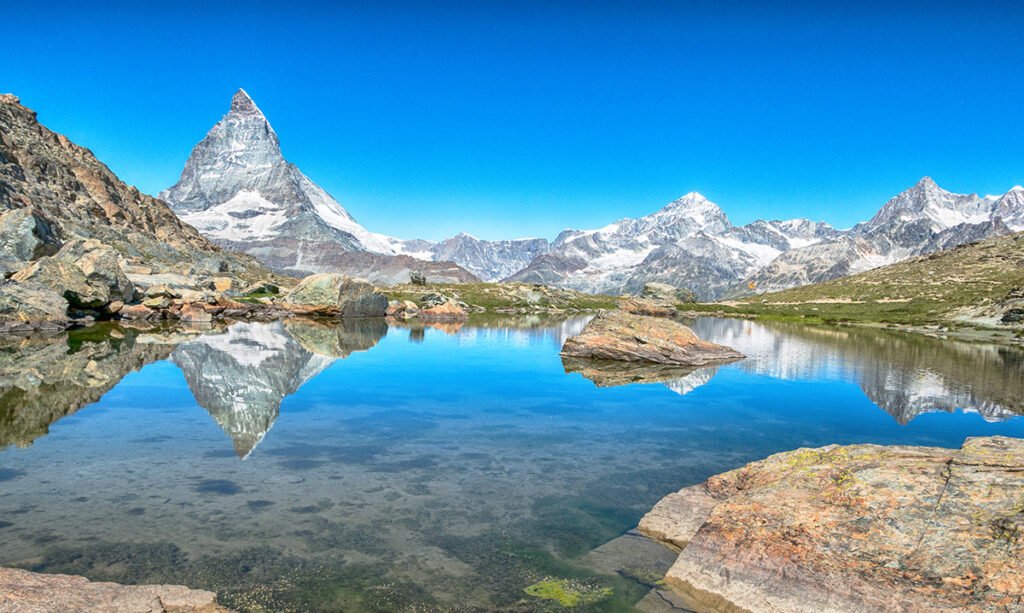
Glaciers, peaks above 4,000 metres, turquoise lakes and picture-book villages: the Alps stretch across eight countries and pack more variety into a small area than almost any other region in Europe.
Whether you hike through flower meadows in summer, carve fresh slopes in winter or simply ride a cogwheel railway up to a viewpoint: in the Alps everyone finds their own rhythm. The downside of so much variety is choice. Switzerland or Austria? Dolomites or Mont Blanc? Hiking or lakes?
In this guide we introduce the five most beautiful Alpine regions, show the best experiences, explain the ideal time to travel and give honest tips on costs and getting there – so your Alpine trip fits you perfectly.
1. Switzerland: Zermatt and the Matterhorn
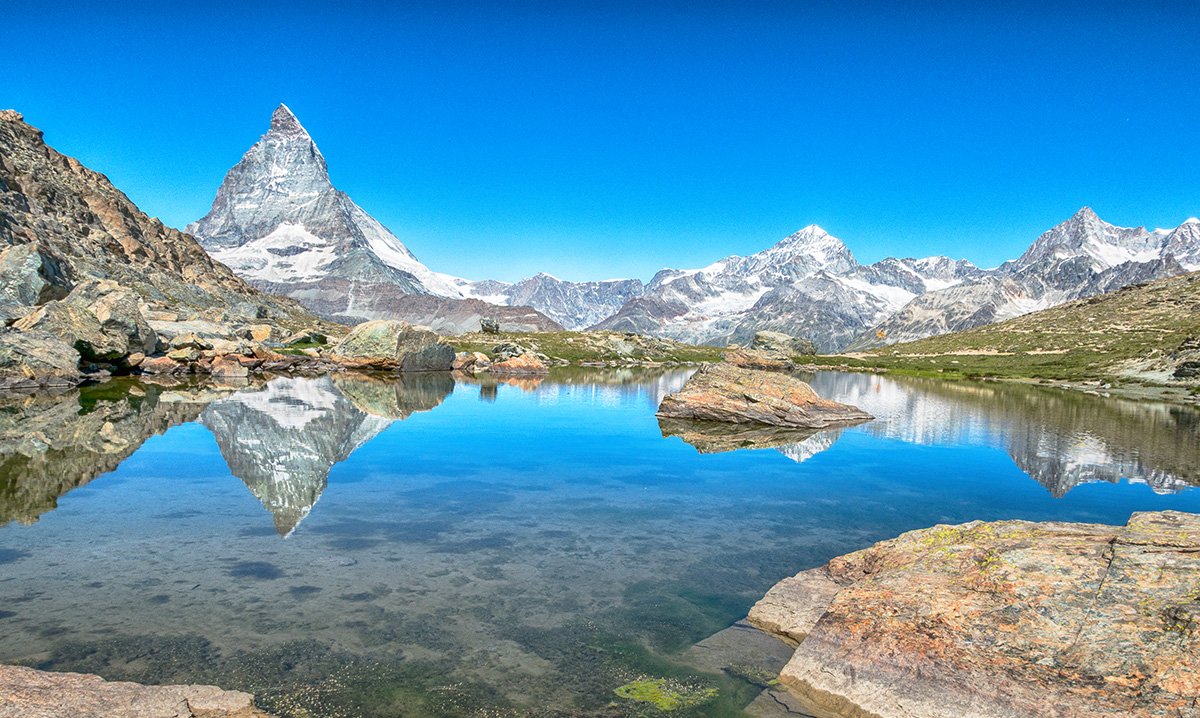
Few mountains are as iconic as the 4,478-metre Matterhorn. Car-free Zermatt at its foot is both mountain village and world-class resort: electric taxis instead of cars, wooden chalets beside design hotels, and the famous pyramid visible from almost every terrace.
A cable car takes you up to the Matterhorn Glacier Paradise at around 3,880 metres – the highest cable car station in Europe, where you can ski on the glacier even in midsummer. Hikers prefer the Five Lakes Walk: on calm days the Matterhorn is reflected in several mountain lakes.
Tip: Switzerland is expensive. If you travel by train and mountain railways for several days, a Swiss Travel Pass or a regional lift pass often saves money.
→ See tours & tickets in Zermatt
2. Switzerland: The Bernese Oberland with Eiger, Mönch and Jungfrau
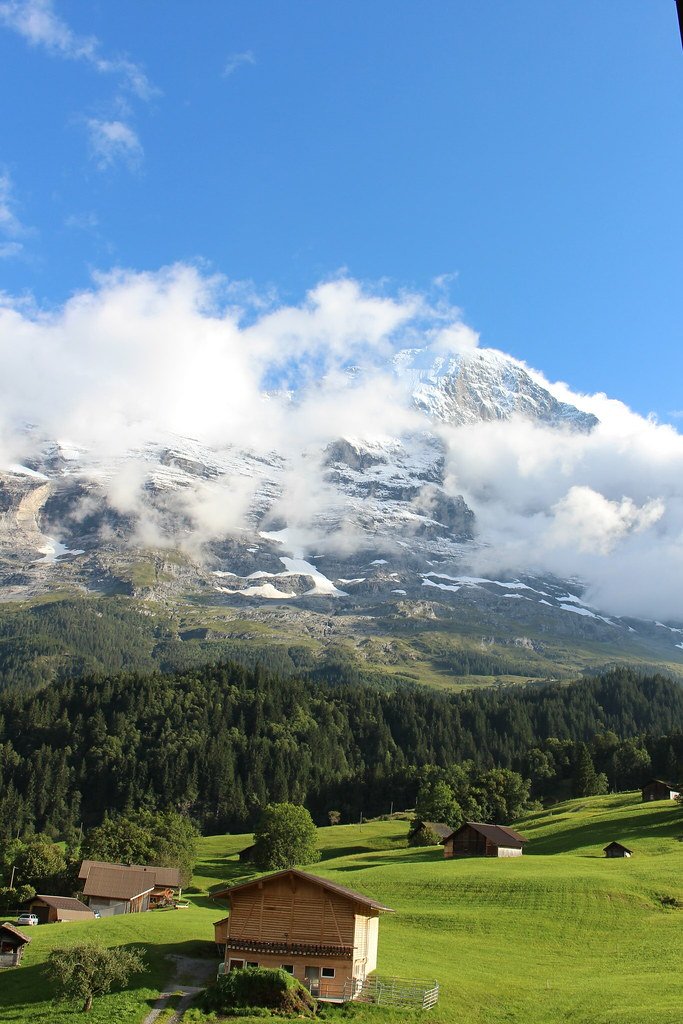
The trio of Eiger, Mönch and Jungfrau is one of the best-known mountain panoramas in the world. Base yourself in Grindelwald or Interlaken, between Lake Thun and Lake Brienz. From here the Jungfrau Railway tunnels through the rock up to the Jungfraujoch – at 3,454 metres the highest railway station in Europe, marketed as the “Top of Europe”.
Hikers love the Eiger Trail right below the notorious North Face, adrenaline seekers the paragliding flight over Interlaken. And if you prefer calm, take the boat across crystal-clear Lake Brienz to Iseltwald.
→ See Jungfraujoch & Interlaken experiences
3. Austria: Salzkammergut and Tyrol
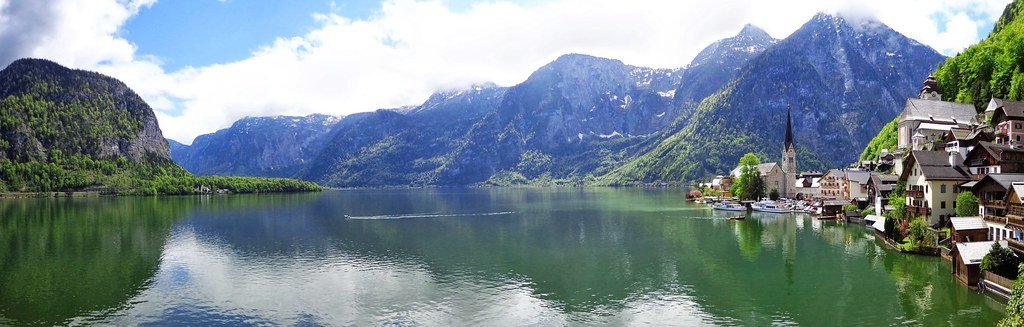
Austria is the most welcoming Alpine nation for beginners: well-maintained trails, staffed huts almost everywhere and a price level clearly below Switzerland. The ultimate postcard view is Hallstatt in the Salzkammergut – the lakeside village is part of a UNESCO World Heritage site. Our tip: come early in the morning or in the evening when the day-trip buses have left.
In Tyrol, Innsbruck tempts with the Nordkette cable car, which takes you from the old town to over 2,000 metres. In summer the Grossglockner High Alpine Road leads to Austria’s highest mountain (3,798 m); in winter Ischgl, St. Anton and Sölden are the big ski names.
4. Italy: The Dolomites
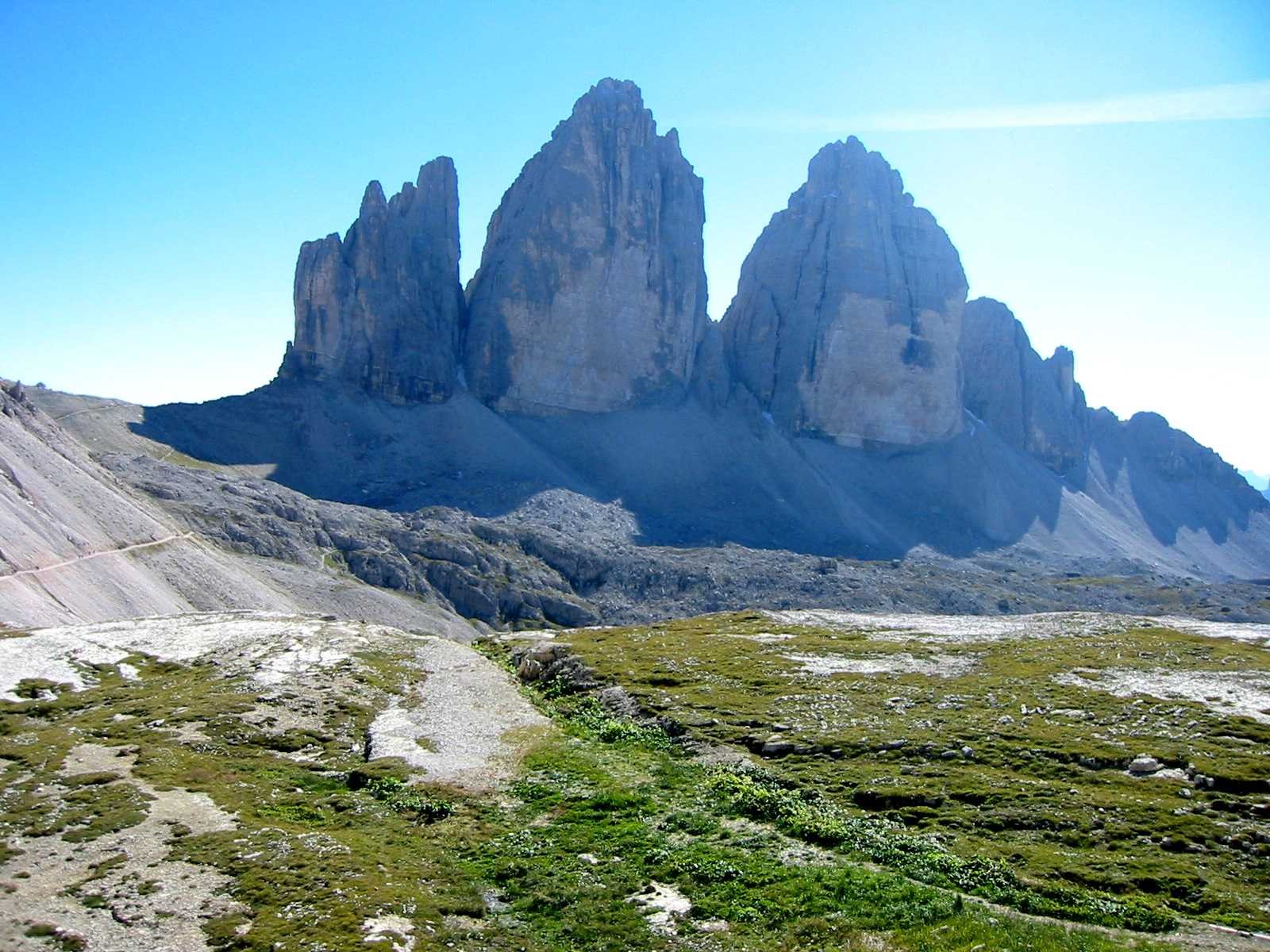
The pale, vertical rock towers of the Dolomites look as if someone built a cathedral of stone – no wonder they are a UNESCO World Heritage site. The classic is the loop around the Tre Cime di Lavaredo, a very doable half-day hike with spectacular views.
Photographers head to the Seceda ridge above Ortisei in Val Gardena, adventurers to the via ferratas, originally built in the First World War. And in between: Italian food in mountain huts – dumplings and pasta at 2,000 metres.
Tip: many passes and car parks in the Dolomites are heavily regulated or tolled in high summer. Start early or use buses and cable cars.
→ See Dolomites tours & via ferratas
5. France: Chamonix and Mont Blanc
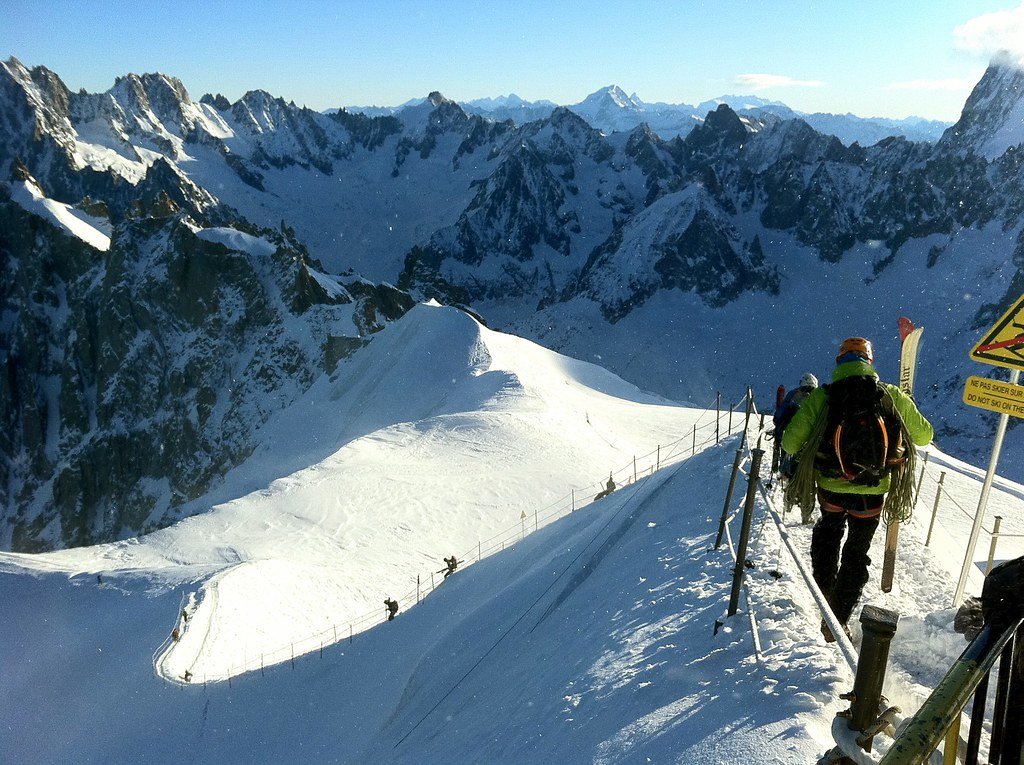
Chamonix is the cradle of mountaineering: in 1786 Mont Blanc was climbed from here for the first time – at just over 4,800 metres the highest mountain in the Alps. Today a cable car takes you up the Aiguille du Midi (3,842 m), where you can stand in the glass “Step into the Void” above the abyss.
Less dizzying but just as impressive: the cogwheel train to the Mer de Glace, France’s largest glacier. With several days to spare, tackle sections of the Tour du Mont Blanc – one of the world’s most famous long-distance trails through France, Italy and Switzerland.
Hidden gem: Slovenia and the Julian Alps
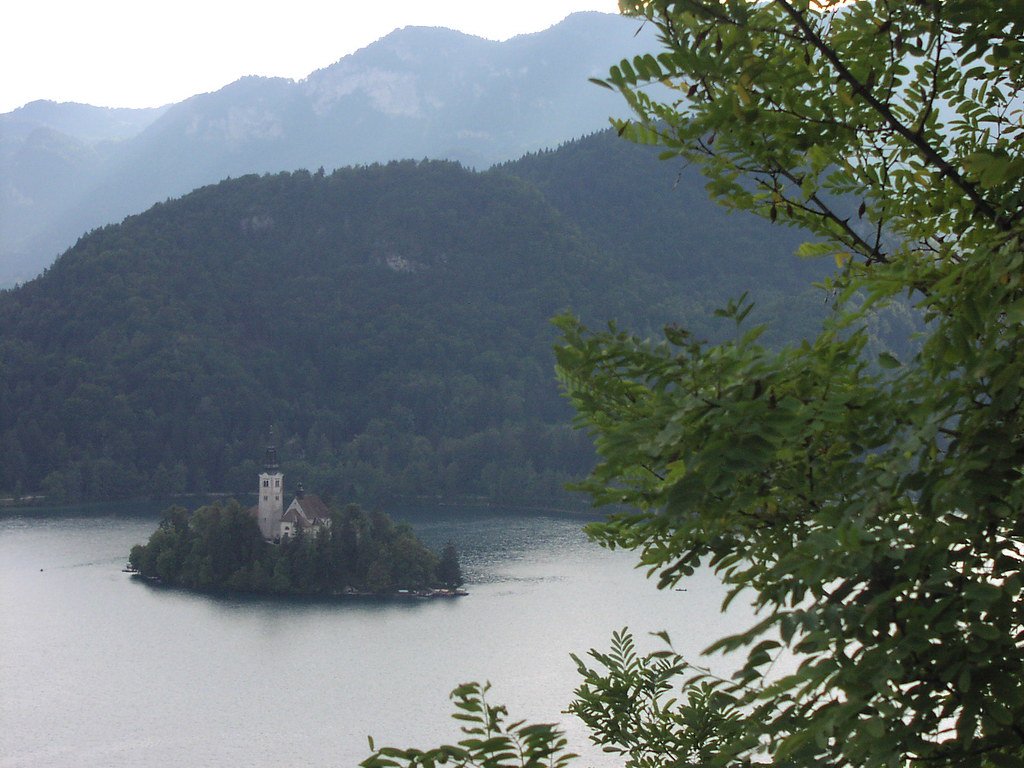
If you want the Alps without Alpine prices, head to Slovenia. Lake Bled with its island church and clifftop castle is the showpiece; neighbouring Lake Bohinj is the quieter alternative. In the Soča Valley the river glows an unreal emerald green – perfect for rafting, canyoning and kayaking.
Triglav National Park is Slovenia’s only national park and a paradise for hikers. Price-wise, Slovenia is noticeably cheaper than Switzerland – with comparably spectacular nature.
Best time to visit the Alps
Summer (mid-June to September): the high trails are snow-free and all lifts and huts are open. July and August are busiest – for many, September is the best hiking month: stable weather, clear views, fewer people.
Winter (December to April): ski season. Christmas, New Year and the February school holidays are expensive and crowded; January and March often offer the best balance of snow and price.
Shoulder season (May, October/November): cheap and quiet, but many lifts and huts are closed. Good for lakes and towns, less so for high-altitude tours.
Getting there and around
The Alps are superbly connected by rail. Panorama trains such as the Glacier Express between Zermatt and St. Moritz are an experience in themselves. For the Dolomites and remote valleys a rental car is often more practical – note tolls and vignettes in Austria, Switzerland and Slovenia.
Depending on the region, the nearest airports are Zurich, Geneva, Munich, Innsbruck, Salzburg, Venice or Ljubljana.
How much does an Alpine trip cost?
The range is wide. Switzerland is one of the most expensive countries in Europe – lifts, hotels and food add up quickly. Austria and South Tyrol sit in the middle, Slovenia is noticeably cheaper. Money-saving tips: stay in mountain huts, book half board, compare lift passes and avoid peak holiday periods.
Frequently asked questions
Which Alpine region is the most beautiful?
It depends on your taste: iconic peaks in Zermatt and the Bernese Oberland, bizarre rock formations in the Dolomites, lakes and villages in the Salzkammergut, a small budget in Slovenia.
Do I need mountain experience?
No. Many highlights are reachable by train or cable car, and there are countless easy trails. For via ferratas and high-altitude tours, however, book a certified mountain guide.
How many days should I plan?
4–5 days are enough for one region; for combining two countries, plan at least a week.
* This article contains affiliate links. If you book through them, we earn a commission – at no extra cost to you.